
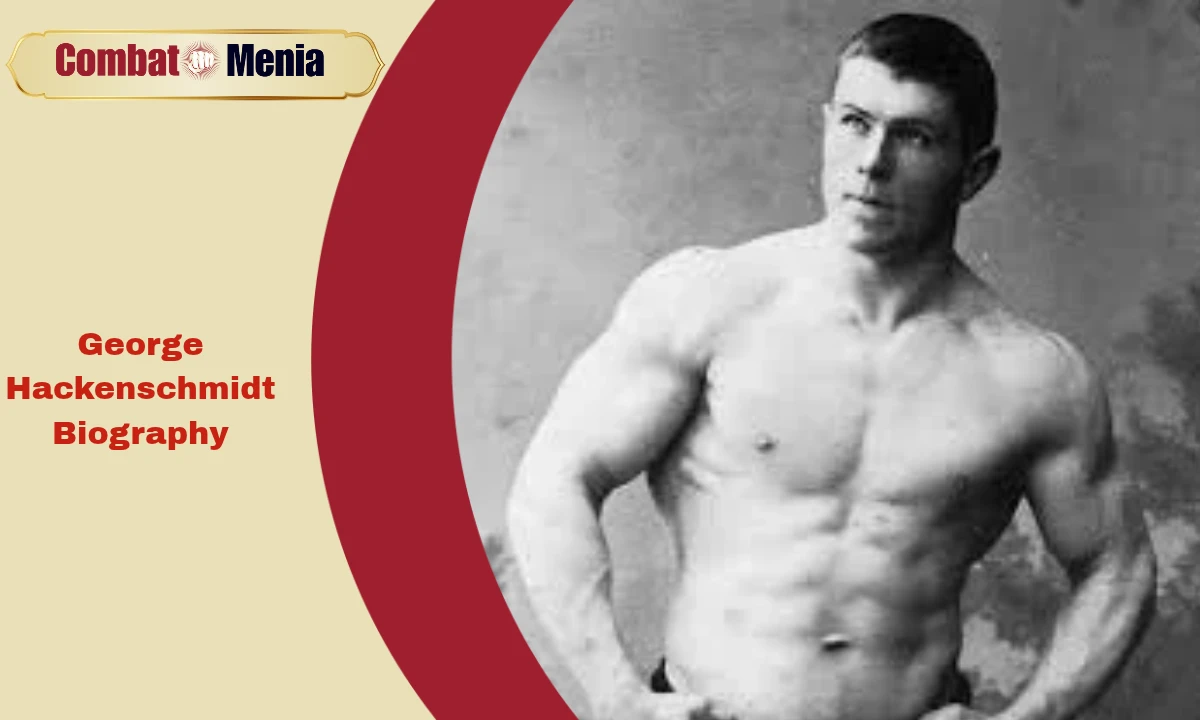
Hackenschmidt was known by the nickname of the Russian Lion and was a wrestler and a strongman, born on August 1, 1877, in Dorpat, Estonia, now Tartu, and is regarded as the first World Heavyweight Wrestling Champion. He won the world title in 1905 and went down in history as one of the greatest athletes on Earth. He died on February 19, 1968, at the age of 90. He is also famous for inventing the hack squat – a weight lifting exercise that is still named after him.
In the whole career spanning approximately 3,000 fights, Hackenschmidt lost twice, both times against the great American wrestler Frank Gotch. The biographical information below will give you some insights into the life of this athlete from Estonia.
George Hackenschmidt Quick Bio and Profile
| Detail | Information |
|---|---|
| Full name | Georg Karl Julius Hackenschmidt |
| Nickname | The Russian Lion |
| Date of birth | August 1, 1877 |
| Birthplace | Dorpat (now Tartu), Estonia, then Russian Empire |
| Date of death | February 19, 1968 (aged 90) |
| Place of death | London, England |
| Heritage | Estonian (Baltic German and Estonian-Swedish descent) |
| Height | 5 feet 9 inches (175 cm) |
| Weight | 220 lb (100 kg) |
| Known for | First World Heavyweight Wrestling Champion (1905) |
| Invented | The hack squat exercise |
| Later career | Author and philosopher on health and fitness |
| Hall of Fame | Multiple professional wrestling halls of fame |
Who Was George Hackenschmidt?
George Hackenschmidt was a strongman, weightlifter and professional wrestler who gained recognition as the first World Heavyweight Wrestling Champion in 1905. He was famous as a globally-renowned figure in early twentieth century for having an impressive combination of feats of physical strength and wrestling skill.
Later on when his career in wrestling ended, he established himself as a renowned author and philosopher who wrote extensively about the topics related to physical culture, health and psychology. He not only left his legacy in professional wrestling but also contributed to the field of fitness in more ways than one, like a named leg exercise and several other fitness ideas.
George Hackenschmidt – Early Life and Strongman
Born Georg Karl Julius Hackenschmidt on August 1, 1877 in Dorpat, a city in Estonia which was part of the Russian Empire until the end of World War I and today it’s known as Tartu, George Hackenschmidt belonged to a family of Baltic German-Estonian-Swedish ethnicity and displayed exceptional athletic talent from his childhood through gymnastics, cycling and weightlifting. As a young man, he developed incredible physical strength and reportedly had the ability to do an one-arm overhead press of 276 pounds and lift a small horse from the floor. In 1898, he finished third in a weightlifting tournament held in Vienna, Austria and won a European Greco-Roman wrestling title there.
George Hackenschmidt Height, Weight, and Strength Feats
Hackenschmidt stood 5 feet 9 inches tall, or about 175 centimetres, and competed at around 220 pounds (100 kilograms). Though not especially tall, he was famous for a thickly muscled, powerful physique that made him one of the strongest men of his era. Some of his reported feats of strength are listed below.
| Feat or Measurement | Detail |
|---|---|
| Height | 5 feet 9 inches (175 cm) |
| Weight | Around 220 lb (100 kg) |
| One-arm overhead press | Reportedly 276 lb |
| Signature strength feat | Lifting a small horse off the ground |
| Weightlifting | Third place at the 1898 Vienna championships |
George Hackenschmidt Wrestling Career and First World Title
Hackenschmidt turned to professional wrestling at the turn of the century and quickly conquered Europe. He won the 1901 Paris world championship tournament, toured England under showman C. B. Cochran in 1903, and beat major rivals such as Ahmed Madrali and Tom Jenkins in London in 1904.
His crowning moment came in 1905, when he travelled to the United States and defeated American champion Tom Jenkins at Madison Square Garden in New York, winning in two straight falls under catch-as-catch-can rules. That victory made him the first widely recognised World Heavyweight Wrestling Champion, a title that carried enormous prestige in an era when wrestling was one of the world’s most popular sports.
George Hackenschmidt vs Frank Gotch: The Legendary Rivalry
The defining rivalry of Hackenschmidt’s career was with American wrestler Frank Gotch, and their two meetings remain among the most famous matches in the sport’s history. On April 3, 1908, at the Dexter Park Pavilion in Chicago, Gotch wore down the champion over roughly two hours until Hackenschmidt finally quit, surrendering his world title in a bruising contest.
A hugely anticipated rematch followed on September 4, 1911, at Comiskey Park in Chicago, drawing one of the largest crowds in wrestling history to that point. Gotch won again, this time in straight falls in about twenty minutes using his feared toe hold. Hackenschmidt later said he had entered the match with a serious knee injury. Remarkably, in a career of around 3,000 matches, these two losses to Gotch were reportedly the only defeats of his professional wrestling life.
George Hackenschmidt Achievements and Honors
| Achievement | Year | Detail |
|---|---|---|
| European Greco-Roman title | 1898 | Won the openweight title in Vienna |
| Paris world championship tournament | 1901 | Won the major European tournament |
| World Heavyweight Wrestling Championship | 1905 | First recognised champion, beat Tom Jenkins |
| International Pro Wrestling Hall of Fame | 2003 | Inducted |
| Pro Wrestling Hall of Fame and Museum | 2021 | Inducted |
| Hackenschmidt Memorial tournament | 1969 | Held in his honour in Tartu, Estonia |
George Hackenschmidt Career Timeline
| Year | Milestone |
|---|---|
| 1877 | Born on August 1 in Dorpat (Tartu), Estonia |
| 1898 | Took third at the Vienna weightlifting championships and won a European Greco-Roman title |
| 1901 | Won the Paris world championship tournament |
| 1904 | Defeated Ahmed Madrali and Tom Jenkins in London |
| 1905 | Beat Tom Jenkins at Madison Square Garden to become the first World Heavyweight Champion |
| 1908 | Lost the title to Frank Gotch in Chicago |
| 1911 | Lost the Gotch rematch at Comiskey Park and retired |
| 1941 | Published his most popular book, The Way to Live in Health and Physical Fitness |
| 1968 | Died on February 19 in London at the age of 90 |
George Hackenschmidt and the Hack Squat
One of Hackenschmidt’s most lasting contributions is in the gym rather than the ring. He is credited with inventing the hack squat, a lower-body exercise that still bears his name, with hack referring directly to Hackenschmidt. He is also widely credited with helping to popularise the bench press, and in professional wrestling he is believed to have created the modern version of the bear hug. His ideas on training and strength shaped the early physical culture movement that led to modern bodybuilding and strength sports.
George Hackenschmidt as an Author and Philosopher
After retiring from the ring, Hackenschmidt settled in London, living for many years in the South Norwood area, and turned his attention to writing and philosophy. He became a respected author on health, fitness, and the human mind, producing works such as Complete Science of Wrestling in 1909 and, most famously, The Way to Live in Health and Physical Fitness in 1941.
He also wrote philosophical books, some developed while he was interned as a prisoner of war in Germany during the First World War. In his later years he taught physical education to members of the British House of Lords and served as a judge at the 1948 Mr. Universe contest in London, keeping him connected to the world of strength until late in life.
George Hackenschmidt Death
George Hackenschmidt died on February 19, 1968, in London, England, at the age of 90. By then he had long been regarded as a living link to the earliest days of professional wrestling and strength sport. In his honour, the Georg Hackenschmidt Memorial Greco-Roman tournament has been held in his birthplace of Tartu, Estonia, since 1969.
George Hackenschmidt Legacy
The legacy of George Hackenschmidt reaches across more than a century of combat sports and fitness. As the first World Heavyweight Wrestling Champion, he helped turn wrestling into a global spectacle, and his near-perfect record of only two career losses is still remembered with awe. His name still lives in every gym through the hack squat, and his books helped shape how people think about strength and health. Few athletes from any era have influenced both sport and physical culture so deeply.
George Hackenschmidt Trivia and Fun Facts
- He was nicknamed the Russian Lion at the 1899 Paris championships, even though he was ethnically Estonian.
- The hack squat exercise is named directly after him.
- In roughly 3,000 matches, he reportedly lost only twice, both times to Frank Gotch.
- He once pressed about 276 pounds overhead with a single arm.
- His 1941 book, The Way to Live in Health and Physical Fitness, became a classic of early fitness writing.
- He judged the 1948 Mr. Universe contest in London and taught fitness to members of the House of Lords.
Frequently Asked Questions
He was an Estonian-born strongman and professional wrestler, nicknamed the Russian Lion, who became the first widely recognised World Heavyweight Wrestling Champion in 1905.
He was born on August 1, 1877, in Dorpat (now Tartu), Estonia, and died on February 19, 1968, in London, England, at the age of 90.
Yes. The hack squat exercise is credited to him and is named after him, with hack referring to Hackenschmidt.
In a career of around 3,000 matches, he reportedly lost only two, both to the American wrestler Frank Gotch, in 1908 and 1911.
He earned the nickname at the 1899 Paris championships because he represented the Russian Empire, of which Estonia was then a part.
His works include Complete Science of Wrestling (1909) and his most famous title, The Way to Live in Health and Physical Fitness (1941), along with several philosophical books.
Also read: Afa Anoa’i: Biography, Age, Family, Career, and Legacy of the Wild Samoan